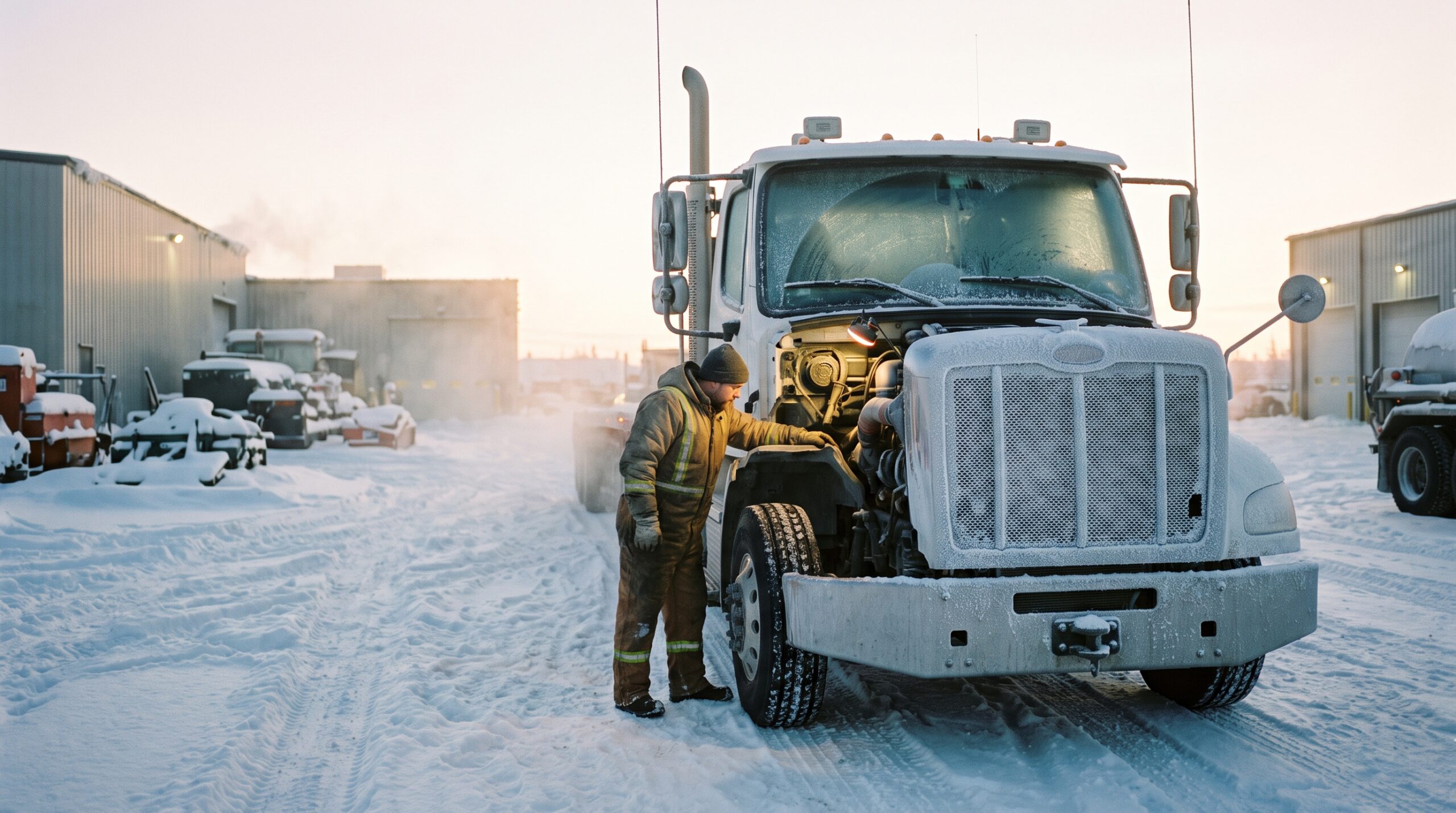

For commercial fleets operating in Alberta, sub-zero winter mornings and rapid Chinook-to-Arctic cold snaps create severe mechanical stress on heavy-duty diesel engines. Unlike gasoline engines, which use spark plugs, diesels rely on the heat of compression to ignite fuel. When temperatures drop well below freezing, generating enough cylinder heat for ignition becomes significantly harder.
Cold snaps routinely trigger a spike in unscheduled roadside calls. An unplanned heavy-duty breakdown combines recovery towing, diagnostic labor, and missed delivery windows. Understanding the root causes of cold-weather no-starts allows drivers and fleet dispatchers to triage issues in the field, helping avoid preventable towing and secondary component damage.
This guide breaks down the physical challenges of winter diesel operation, provides a step-by-step diagnostic framework for cold no-starts, and explains when to call for mobile truck repair in Calgary.
What Are the Three Core Systems Behind a Cold Diesel No-Start?
When a commercial diesel truck fails to start on a cold morning, the issue usually traces back to one or more of three core systems:
Available Cranking Speed and Electrical Power: The condition of the battery bank, cable connections, and starter motor.
Combustion Chamber and Intake Heat: The operation of intake air heaters, glow plugs, or block heaters.
Fuel Fluidity and Filtration: Paraffin wax crystallization (gelling), frozen water separators, and fuel filter restrictions.
When a diesel engine sits overnight in freezing weather, the cold metal of the engine block and cylinder head absorbs heat during compression. At the same time, cold engine oil thickens, increasing viscous drag that slows starter cranking speed. For the engine to fire reliably, the electrical system, pre-heating aids, and fuel delivery system must all work together.
Triage by Symptom: Fast Field Identification
In freezing temperatures, cranking speed and exhaust smoke offer useful early clues during a no-start. White or grey exhaust smoke with a raw fuel smell often points to insufficient cylinder heat from a faulty intake heater or glow plug system, whereas normal cranking speed with no exhaust smoke typically indicates that fuel is not reaching the cylinders due to gelled fuel, a frozen water separator, or an electronic fuel inhibit.
Before draining the battery bank with frantic cranking, drivers can narrow down the fault by observing crank speed and exhaust stack output:
Symptom on Key Turn | Primary Suspect | What Is Likely Happening |
|---|---|---|
Single click, rapid clicking, or slow cranking | Electrical or Starting System | Low battery capacity or high circuit resistance is dropping voltage under load, preventing the starter from reaching minimum cranking speed or starving the ECM of operating voltage. |
Normal cranking RPM + heavy white or grey smoke | Insufficient Cylinder Heat | Fuel is entering the cylinders, but combustion chamber temperatures are too low for ignition, sending unburned atomized diesel out the exhaust. |
Normal cranking RPM + no smoke from exhaust | Fuel Starvation or Injection Inhibit | Fuel is not being injected, commonly because wax-plugged filters or a frozen water separator are blocking fuel delivery. |
Starts briefly, runs rough, then stalls | Fuel Supply Restriction | The engine burns the liquid fuel remaining in the rail and lines, then loses fuel pressure against a restricted filter or supply line. |
System 1: Cold Cranking Amperage and Battery Health
Most heavy-duty commercial trucks use multiple batteries wired in parallel to supply high cranking current. Because cold temperatures slow the electrochemical reaction inside lead-acid batteries at the exact time thickened engine oil increases starter load, available cranking power drops sharply in winter. If a weak battery cell or corroded cable causes voltage to sag too far during cranking, the starter cannot spin the engine fast enough to build compression heat, and the engine control module (ECM) may disable injector firing.
In a parallel battery bank, a single degraded or shorted battery can draw down the healthy batteries connected to it. Load testing and voltage drop testing across cables are essential before winter. Corroded stud terminals, worn ground straps, or oxidized starter lugs create electrical resistance that robs the starter of voltage and generates localized heat at the connections.
Drivers should crank the engine in short bursts and allow the starter motor to cool between attempts rather than cranking continuously. Prolonged cranking builds intense heat inside the starter windings, brushes, and solenoid, which can permanently damage the starter and rapidly drain the remaining battery charge.
System 2: Intake Grid Heaters vs. Glow Plugs
Heavy-duty diesel platforms use two distinct pre-heating architectures to combat the cold.
Intake Air Grid Heaters (used on many heavy-duty inline-six diesel engines) use an electrically heated element in the intake path to warm incoming air before combustion. Because these heaters draw substantial current during their pre-heat and post-heat cycles, they place a heavy demand on the battery bank.
A weak battery bank or high-resistance cable connection can prevent a grid heater from reaching proper temperature even when the heating element itself is intact. Technicians should load-test the batteries and verify voltage at the heater relay and element before replacing the grid heater assembly.
Glow Plug Systems (common on medium-duty diesels, light commercial pickups, and diesel auxiliary power units) use pencil-style heating elements positioned inside each cylinder. While one or two failed glow plugs may cause hard starting or rough idle in mild cold, multiple failed plugs or a faulty glow plug controller or relay can prevent a cold engine from starting altogether.
CRITICAL SAFETY WARNING: Never spray ether or starting fluid into a diesel engine equipped with an active intake air heater or glow plugs. Ether auto-ignites at a much lower temperature than diesel fuel. If sprayed into a pre-heated intake, it can detonate prematurely in the manifold or cylinders and cause severe internal engine damage.
System 3: Diesel Fuel Gelling and Filtration
Modern High-Pressure Common Rail (HPCR) diesel engines rely on fine fuel filters that quickly trap paraffin wax crystals once fuel temperatures fall below the fuel’s cloud point. Because anti-gel cold-flow improvers work by modifying wax crystal formation before the fuel gels, they must be mixed into liquid fuel ahead of a cold snap. Once a truck has already gelled, pouring preventative anti-gel into the tank will not clear a wax-plugged filter.
The low-temperature operability of commercial diesel fuel varies by season, refinery blend, and terminal location. Trucks that fuel up during milder weather or travel into a sudden Alberta cold snap may carry fuel with a higher cloud point than ambient temperatures allow, leaving the fleet vulnerable to waxing if the fuel is untreated.
Recovering a gelled truck typically requires removing and replacing the wax-plugged fuel filters, treating the fuel tanks with a dedicated diesel reliquefier or thaw additive, priming the fuel system according to the engine manufacturer’s procedure, and safely warming the fuel lines and filters.
Related Cold-Snap Traps: Frozen DEF and Air Systems
Even if the engine fires up, secondary systems frequently prevent commercial trucks from moving during deep freezes.
Frozen DEF: Diesel Exhaust Fluid freezes at approximately -11°C (12°F). Commercial trucks are designed to start with frozen DEF and thaw the tank and lines using an onboard heating system. However, if a DEF heater valve, line heater, or temperature sensor fails, the aftertreatment system cannot dose properly, triggering fault codes and progressive engine derates.
Frozen Air Systems: When an air dryer desiccant cartridge becomes saturated with moisture or oil, water vapour passes into the wet and dry air tanks. In freezing weather, accumulated moisture can freeze inside air lines, governors, or brake valves, preventing the compressor from building system air pressure or keeping the spring brakes from releasing.
Frequently Asked Questions About Winter Breakdowns
Where can I find mobile truck repair in Calgary?
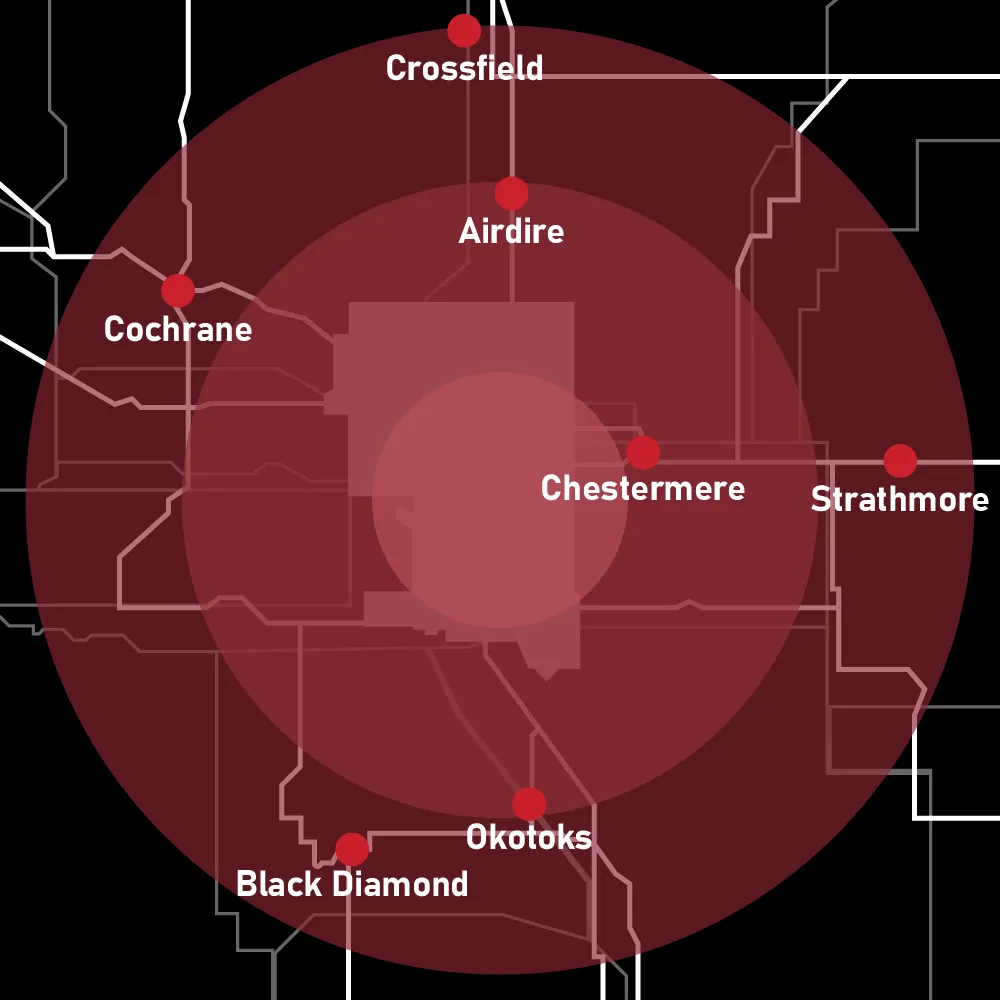
Rusted Nuts Mechanical Services provides heavy-duty mobile truck repair across Calgary, Rocky View County, and surrounding communities. Their mobile technicians handle on-site diagnostics, electrical and starting system repairs, fuel and air system troubleshooting, brake repairs, and preventive fleet maintenance. For breakdowns that can be safely resolved on location, mobile service helps fleets avoid heavy towing delays and get trucks back in service faster.
Who provides expert diesel engine repair in Calgary?
For commercial fleets and owner-operators needing diesel engine repair in Calgary, Rusted Nuts Mechanical Services provides heavy-duty and light-duty engine diagnostics, electrical system testing, coolant and driveline repairs, and preventive maintenance from its shop in Rocky View County and through mobile field service. Their technicians combine fault-code diagnostics with hands-on electrical and mechanical testing to identify root causes before replacing major components.
How do I get 24/7 roadside truck service in Calgary?
When a commercial truck experiences a winter no-start, gelled fuel system, dead battery bank, or frozen air system in the Calgary area, Rusted Nuts Mechanical Services offers round-the-clock roadside assistance and mobile truck repair. Drivers stranded in freezing weather should avoid repeated prolonged cranking that can overheat the starter or drain the battery bank, and instead call (587) 437-2553 to arrange mobile diagnostics or roadside assistance.