Temporary fixes vs proper repair for heavy trucks directly affects safety, compliance, and liability exposure during breakdowns or time-sensitive operations. A temporary fix is a short-term measure that allows limited movement or operation without restoring full system integrity, while a proper repair restores the system to its intended function, performance standard, and compliance condition. Temporary fixes can be planned in controlled environments or applied reactively during roadside failures, and the level of risk differs between these scenarios. Rusted Nuts Mechanical Services evaluates part condition and operating risk to determine whether continued movement remains controlled and safe or whether immediate repair is required to prevent failure, enforcement risk, or further damage.
Why Temporary Fixes Exist in Heavy Truck Operations
Temporary fixes exist because breakdowns do not always occur in controlled environments. Trucks operate across long distances, in variable weather, and under load conditions where immediate full repair may not be possible.
Some temporary fixes act as planned responses, such as stabilizing a known issue long enough to reach a facility, while others occur during roadside failures where restoring limited function becomes necessary to avoid being stranded. Common situations include minor air line leaks, electrical interruptions, or non-structural component failures that prevent normal operation but do not immediately affect vehicle control.
Operational pressure also drives temporary fixes. Delayed shipments, remote locations, and limited access to parts or facilities create situations where restoring limited mobility becomes the priority.
Temporary fixes function as controlled risk decisions, meaning the failure window remains predictable, exposure stays limited, and the system can be monitored during operation rather than assumed to hold under normal conditions.
Scenarios Where Temporary Fixes Are Acceptable
Temporary fixes are acceptable only when they allow controlled movement without compromising safety, system stability, or compliance. The affected system must not control braking, steering, load stability, or inspection-critical functions, and failure must remain isolated from connected systems.
A qualified technician should determine acceptability, not the driver alone. Even non-critical systems can create risk if they influence adjacent components or operating conditions, so each situation requires evaluation.
Temporary fixes remain acceptable only when the truck operates under reduced stress conditions and when the driver can monitor the system for any change in behavior.
Controlled Movement and Short-Distance Operation
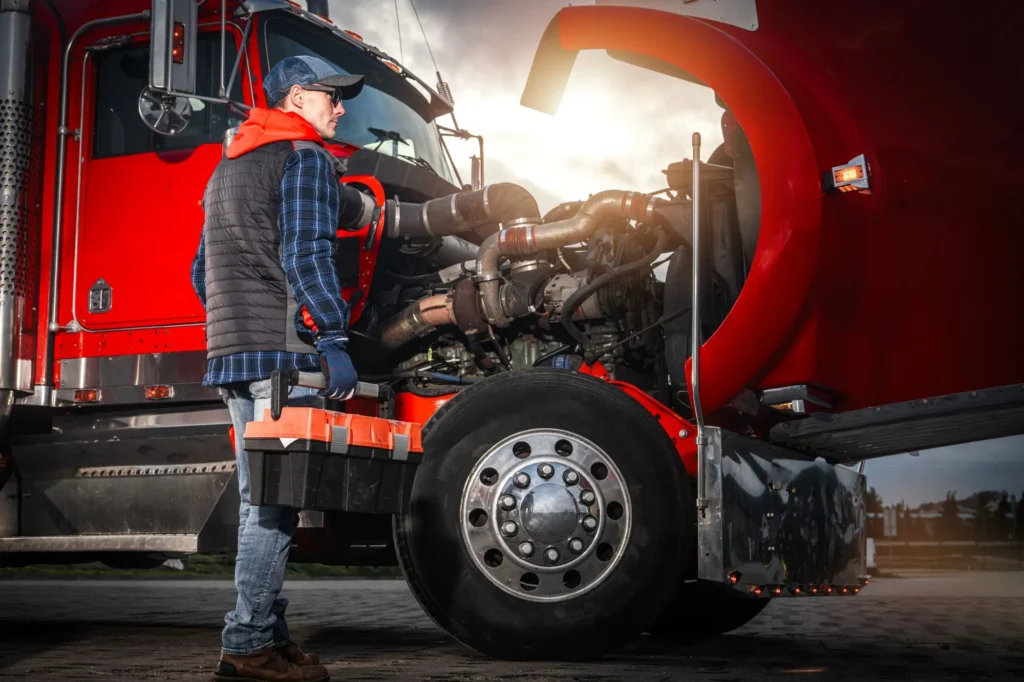
Controlled movement means operating the truck under restricted conditions, including reduced speed, reduced load, and minimized operating time to limit stress on the compromised component.
Short-distance operation means moving the truck to the nearest safe repair location or controlled yard rather than continuing route operations. Distance depends on exposure and operating conditions, not just kilometers traveled.
If no repair facility is immediately available, the situation requires reassessment to determine whether extended movement remains within safe thresholds or whether the truck should be taken out of service. Reduced stress conditions must remain clearly defined and enforced for any continued operation to stay safe.
When a Temporary Fix Becomes a Safety Risk
A temporary fix becomes unsafe when operating conditions exceed the limits of the compromised component or when failure would affect safety, control, or compliance.
Certain systems do not allow temporary fixes under any condition. Failures involving braking, steering, or structural integrity require immediate immobilization because loss of function directly affects vehicle control.
As stress increases, the margin for failure decreases rapidly. Once operating thresholds are exceeded, failure probability accelerates rather than increasing gradually, meaning a fix that held under limited conditions can fail suddenly under normal use.
This transition point depends on how the affected system interacts with vehicle control, load distribution, and environmental exposure.
Load, Speed, and Environmental Thresholds
Load weight increases mechanical stress and accelerates failure risk in compromised components. Uneven load distribution further increases stress concentration and can shift force onto weakened areas.
Higher speeds amplify vibration, heat, and dynamic force, which reduces the reliability of temporary fixes and shortens the window before failure.
Environmental conditions introduce additional variables. Cold temperatures increase brittleness in materials, while heat causes expansion and pressure buildup in certain systems. Moisture, debris, and road surface variation add impact stress and reduce consistency in how the fix performs.
These factors act as measurable stress variables rather than general unpredictability. If the truck cannot operate within reduced load, speed, and environmental exposure, the temporary fix no longer qualifies as safe for continued movement.
Legal and Liability Risks of Delaying Proper Repairs
Operating a truck with a temporary fix introduces legal and liability risk when the condition affects safety or compliance. Regulatory violations occur when the vehicle fails inspection standards, while liability exposure increases if the condition contributes to an incident.
Roadside inspections can place the truck out of service if a temporary fix does not meet safety requirements. This outcome creates immediate downtime, potential fines, and operational disruption.
Documentation of a temporary fix or communication with dispatch does not remove liability if the vehicle operates in an unsafe condition. Responsibility remains with both the operator and the decision to continue operating.
In practice, delaying proper repair in safety-critical situations increases exposure to enforcement action, financial penalties, and incident liability.
Transitioning From Temporary Fix to Permanent Repair
A temporary fix reaches its limit when it can no longer maintain stable behavior under the conditions it was originally intended to handle or when operating requirements exceed those limits.
Warning signals include changes in system behavior, reduced performance, visible deterioration, or increases in heat, vibration, noise, or functional instability. These indicators show that the margin for safe operation has narrowed and that failure risk is increasing.
Monitoring does not extend the safe operating window of a temporary fix. It only allows earlier detection of failure progression. Once conditions exceed the original assumptions behind the fix, continued operation is no longer justified.
A proper repair restores full system integrity, eliminates uncertainty, and returns the vehicle to a compliant operating condition.