A truck derate caused by a DPF, DEF or SCR fault requires identifying which part of the diesel emissions system is responsible before attempting repairs. A regeneration, DEF refill or sensor replacement may resolve certain problems, but these corrective actions are not interchangeable.
Similar dashboard warnings can originate from different components, and an unresolved emissions fault may progress into more restrictive operating limits. Rusted Nuts Mechanical Services provides heavy-duty truck diagnostics in Calgary to help operators investigate engine faults and determine the appropriate next steps.
What a Truck Derate Is Telling You
A truck derate occurs when the engine control system deliberately restricts performance in response to a detected fault or operating condition. Emissions-related derates may limit engine torque, reduce maximum vehicle speed or impose additional operating restrictions when the aftertreatment system cannot function as required.
The severity depends on the fault, engine manufacturer and control-system calibration. Some trucks initially experience reduced pulling power while remaining driveable, whereas others display warnings before noticeable performance restrictions begin.
A derate identifies a response from the engine management system rather than a specific failed component. A check engine light does not necessarily mean a derate is active, and reduced power alone does not establish that the emissions system is responsible.
Separating DPF, DEF and SCR Faults
The diesel particulate filter (DPF), diesel exhaust fluid (DEF) delivery system and selective catalytic reduction (SCR) system perform different functions within diesel exhaust aftertreatment. Their faults can produce overlapping warnings, making the reported fault codes and operating conditions important for distinguishing one problem from another.
DPF Restrictions and Regeneration Problems
The diesel particulate filter captures soot from engine exhaust, while regeneration raises exhaust temperatures to burn accumulated soot and maintain acceptable exhaust flow. DPF-related faults generally involve excessive soot loading, unsuccessful regeneration or conditions preventing the filter from operating properly.
A filter accumulating soot faster than expected may indicate excessive soot production or operating conditions that do not support adequate regeneration. This differs from a filter that has reached normal regeneration thresholds but cannot complete the process because of sensor faults, insufficient exhaust temperatures or regeneration-system problems.
Drivers may notice increasingly frequent regeneration requests, unsuccessful regeneration cycles or reduced power as soot loading increases. However, a DPF warning does not automatically mean the filter is physically blocked or requires replacement.
Ash accumulation, inaccurate differential pressure readings and faulty exhaust temperature sensors can also produce DPF-related concerns. Unlike soot, accumulated ash cannot be removed through normal regeneration and may eventually require professional filter servicing.
DEF Quality, Level and Delivery Faults
Diesel exhaust fluid is injected into the exhaust stream to support nitrogen oxide reduction within the SCR catalyst. The delivery system must supply the correct fluid quantity under suitable operating conditions for the emissions controls to function properly.
Low DEF levels can trigger warnings and eventual operating restrictions, but a truck can also enter a DEF-related derate when the tank is full. Contaminated or incorrectly concentrated DEF, faulty level or quality sensors, restricted lines, pump problems and malfunctioning dosing components can interfere with normal operation.
A full DEF tank confirms only that fluid is present, not that the system is delivering it correctly. If a warning remains after refilling, the problem may involve fluid quality, delivery pressure, sensor information or another component that requires testing.
Cold weather introduces another consideration for trucks operating around Calgary. DEF freezes at approximately -11°C, but systems designed for freezing conditions use heating components to restore normal delivery.
Freezing alone does not establish a system failure, particularly during the initial thawing period. Heater malfunctions or persistent delivery problems after the system should have thawed require further investigation.
SCR Efficiency and NOx Sensor Faults
The selective catalytic reduction system uses ammonia produced from DEF to convert nitrogen oxides (NOx) into nitrogen and water. On many heavy-duty diesel configurations, upstream and downstream NOx sensors help the control system evaluate emissions performance.
An SCR efficiency fault indicates that the expected NOx reduction is not being achieved or cannot be reliably confirmed. Possible causes include insufficient DEF dosing, exhaust leaks, unsuitable catalyst operating temperatures, inaccurate sensor readings or deterioration of the SCR catalyst.
NOx sensor problems can be difficult to distinguish from actual catalyst inefficiency without testing. A sensor providing inaccurate measurements may cause the control system to report poor emissions performance even when the catalyst itself is functioning.
An SCR efficiency code should not automatically lead to catalyst replacement. Sensor operation, DEF dosing and relevant exhaust conditions must be evaluated before determining whether the catalyst is responsible.
Warning Signs That Help Narrow Down the Fault
Dashboard warnings help identify which emissions subsystem deserves attention first, although their exact meaning and sequence depend on the engine manufacturer and vehicle configuration. The combination of warning indicators, displayed messages and operating restrictions is generally more informative than an individual light.
DPF warning light, solid or flashing: A dedicated filter warning commonly indicates excessive soot loading or a regeneration requirement. A flashing indicator accompanied by a check engine warning or reduced power generally indicates greater urgency, with the required action determined by the manufacturer’s instructions.
Low DEF or DEF quality message: A low-level warning points toward insufficient fluid supply, while a quality warning suggests the system has detected unsuitable fluid or a problem verifying its condition. If the message remains after refilling with the correct DEF, additional testing is needed rather than assuming the tank is still low.
SCR efficiency or NOx sensor fault: These warnings direct attention toward emissions conversion performance or the sensors monitoring it. The problem may involve the catalyst, dosing system or inaccurate measurements, so the warning alone cannot identify which component has failed.
Simultaneous DEF and SCR warnings: A DEF delivery problem can prevent the SCR system from achieving the expected NOx reduction, potentially producing warnings associated with both systems. These messages do not automatically establish two independent failures, and the original fault must be distinguished from any resulting performance faults.
Check engine light with multiple emissions warnings: Several warnings appearing together may reflect one underlying fault affecting related emissions monitors. Reviewing which codes appeared first helps separate the initiating problem from faults recorded as the condition progressed.
Derate warning or remaining-operation countdown: A message specifying reduced power, restricted speed or an approaching operating limitation indicates that the control system has identified a condition requiring action. The displayed instructions and applicable engine documentation determine how urgently the truck must be removed from normal operation.
These warning patterns provide a useful starting point for identifying the affected system, but they cannot confirm a failed component on their own. Manufacturer-specific fault codes and supporting diagnostic information are necessary when the symptoms overlap.
When a Parked Regen Can Help — and When It Cannot
A parked regeneration is appropriate when the DPF has accumulated soot, the engine management system permits the procedure and the manufacturer identifies it as a suitable corrective action. It allows the truck to raise exhaust temperatures while stationary rather than relying on operating conditions during normal driving.
Some trucks complete regeneration while driving when suitable exhaust temperatures are maintained. A parked cycle may be necessary when repeated short trips, extended idling or other operating conditions have prevented adequate regeneration.
Before requesting a parked regeneration, operators should check whether the vehicle has an active regeneration inhibit switch or setting. On equipped trucks, this control can prevent regeneration from starting, and its operation should be checked against the manufacturer’s instructions before assuming the system has failed.
The truck must also meet the required operating conditions, which may include appropriate engine temperature, parking brake engagement and other manufacturer-specific requirements. Even when these conditions are satisfied, the engine control system may refuse regeneration if an active fault or excessive soot loading makes the procedure unsuitable.
Parked regeneration produces extremely high exhaust temperatures and must be performed in a location with adequate ventilation and clearance from combustible materials. The manufacturer’s procedure determines whether the operator can initiate regeneration or whether service-level intervention is required.
A parked regeneration cannot correct unsuitable DEF concentration, defective NOx sensors, malfunctioning DEF delivery or unrelated SCR efficiency faults. It also cannot remove accumulated DPF ash or repair the condition responsible for abnormal soot production.
Repeated regeneration attempts should stop when cycles consistently fail, terminate prematurely or do not correct the warning. Each attempt can temporarily alter soot loading, exhaust temperatures and operating conditions, potentially obscuring the original failure pattern if diagnostic information has not been recorded.
Continued high-temperature regeneration attempts may also introduce additional risks when the aftertreatment system is malfunctioning. The appropriate next step is to establish why regeneration cannot complete rather than repeatedly requesting another cycle.
Why Emissions Faults Can Progress Into More Severe Derates
Emissions-related faults may trigger progressively restrictive operating limits when the condition remains unresolved. Depending on the manufacturer’s control strategy, the truck may initially display a warning before reducing available torque or imposing a vehicle speed restriction.
Some systems evaluate how long a confirmed fault has remained active, while others use operating events or specific conditions to determine when additional restrictions apply. Two trucks displaying similar emissions warnings may therefore have different remaining operating limits.
A truck that remains driveable during an initial warning stage may not retain that capability throughout a planned route. Continuing to operate after an escalating derate warning increases the possibility of encountering a severe speed restriction in traffic or at a location where recovery is difficult.
A red stop-engine warning requires the driver to stop as soon as it is safe and follow the manufacturer’s shutdown instructions. A truck that has lost sufficient power to maintain safe traffic speeds or has entered a severe speed restriction should be removed from normal service rather than driven to complete a delivery.
For a less severe warning, the decision to continue to a repair location should account for the displayed instructions, current restrictions, route conditions and distance involved. If safe operation cannot be maintained, suitable recovery or transport should be arranged.
Clearing fault codes or restarting the engine does not establish that an emissions fault has been corrected. Depending on the system, restrictions may remain active or return when the control module detects the unresolved condition.
How a Heavy Truck Derate Should Be Diagnosed
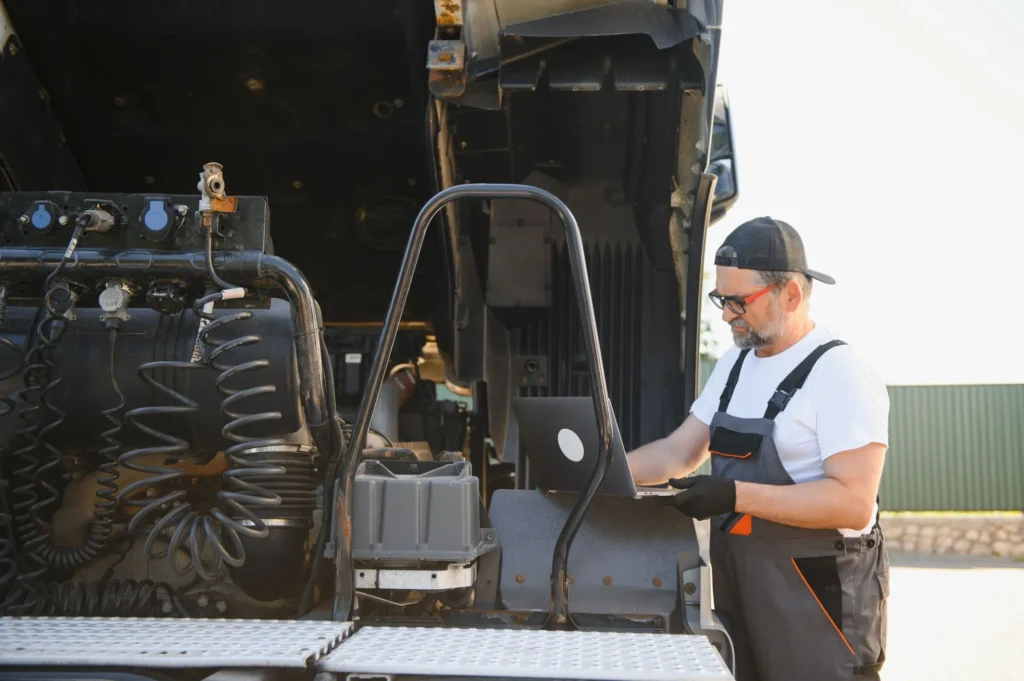
Diagnosing an emissions-related truck derate begins with retrieving active and stored diagnostic trouble codes using equipment compatible with the engine and aftertreatment controls. The codes establish which monitored conditions have failed and provide the starting point for targeted testing.
The diagnostic record should be reviewed for fault occurrence counts, available freeze-frame data, regeneration history and the circumstances in which the warnings appeared. This information helps determine whether the truck has one underlying failure affecting multiple systems or several independent faults.
The required testing depends on the subsystem identified and the conditions recorded by the engine management system.
– DPF-related faults: Review calculated soot loading, differential pressure readings, exhaust temperature data and regeneration history. Pressure sensor readings should be assessed alongside the condition of their associated lines before concluding that the filter itself is restricted.
– DEF-related faults: Check fluid level and concentration where appropriate, along with pump operation, delivery pressure, dosing components, sensors and electrical connections. A quality warning must be distinguished from a sensor or delivery fault before fluid replacement is treated as the solution.
– SCR-related faults: Evaluate NOx sensor readings, DEF dosing performance, exhaust temperatures and other relevant operating conditions. Sensor measurements must be plausible before poor catalyst efficiency can be attributed to a defective SCR catalyst.
A diagnostic trouble code identifies the monitored condition that triggered the response, not necessarily the component requiring replacement. For example, a differential pressure fault may originate in the sensor circuit or pressure lines, while an SCR efficiency fault may result from inadequate DEF delivery.
Once the cause has been confirmed, the repair may involve correcting a fluid problem, repairing wiring, replacing a defective component or addressing a condition preventing successful regeneration. The affected system should then be checked using the applicable manufacturer procedure to confirm normal operation.
Verification may require a completed regeneration, an aftertreatment performance test, suitable operating conditions or additional monitoring, depending on the repair and engine platform. Fault codes should only be cleared as appropriate, and any remaining active faults or derate restrictions must be addressed before the truck is returned to normal service.
Heavy Truck Derate Diagnostics in Calgary From Rusted Nuts Mechanical Services
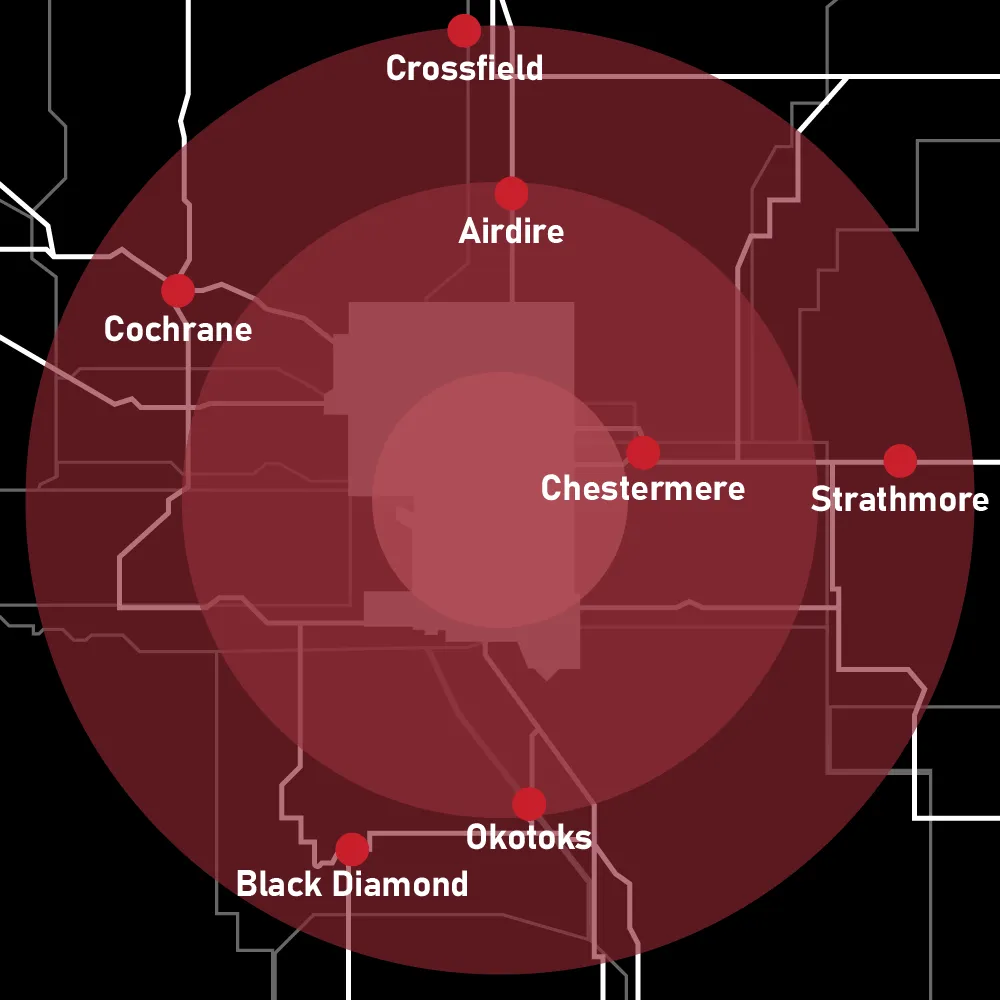
Rusted Nuts Mechanical Services provides heavy-duty truck diagnostics and electrical repairs in Calgary from our Rocky View County facility. We work with commercial truck owners, owner-operators and fleet managers who need engine warning lights, electrical faults and performance restrictions investigated.
When arranging a diagnostic appointment for an emissions-related derate, provide the truck’s make, model, engine information and any displayed warning messages or fault codes. Details about recent DEF refills, unsuccessful regeneration attempts, previous repairs and the conditions under which the derate began help establish the starting point for inspection.
DPF, DEF and SCR concerns require identifying the affected subsystem before determining which tests or repairs are appropriate. The truck’s engine configuration, available diagnostic information and symptoms help establish the necessary inspection and whether specialized aftertreatment testing is required.
Contact Rusted Nuts Mechanical Services to discuss the truck’s symptoms and arrange a diagnostic appointment at our Rocky View County repair facility. Providing the warning details and current operating restrictions when booking helps our team understand the condition before the truck arrives.