Choosing between mobile repair and shop repair depends on whether conditions permit safe on-site work without increasing labour, diagnostic uncertainty, or the likelihood of additional service. Mobile repair usually makes sense for a contained fault that portable equipment allows a technician to diagnose, repair, and test. Shop repair is more suitable when the work requires controlled conditions, heavy equipment, or extended diagnosis. Rusted Nuts Mechanical Services helps Calgary fleet managers and owner-operators determine which option fits the truck, fault, and operating situation.
The Real Decision: Downtime vs Repair Scope
The fastest option is the one that returns the truck to dependable service in the least total time. Total downtime includes mobile dispatch, towing availability, transportation, shop scheduling, parts procurement, repair time, and post-repair testing. Looking only at the arrival time of a technician or tow truck may lead to the wrong decision.
Mobile repair eliminates the immediate need to arrange transportation, transfer a load, assign another driver, or remove equipment from a job site. That advantage matters when the likely fault, required access, necessary tools, replacement parts, and testing method are identifiable before dispatch.
Shop repair may require more transportation time, but it provides access to hoists, component-lifting equipment, parts inventory, controlled lighting, service information, and additional diagnostic tools. These resources often reduce total downtime when the cause remains uncertain or the repair scope may expand after disassembly.
When the symptoms do not reveal a likely repair scope, an initial assessment should determine whether mobile diagnosis is worthwhile. Vehicle information, warning indicators, fault codes, fluid loss, recent repairs, and operating symptoms help establish whether the truck needs a mobile technician, is safe to drive to the shop, or requires towing.
Situations Where Mobile Repair Is the Better Choice
Mobile repair is most practical when the probable fault is known, the affected components are accessible, and completing the work in one visit is realistic. The location must also support safe work and reliable testing before the truck returns to service.
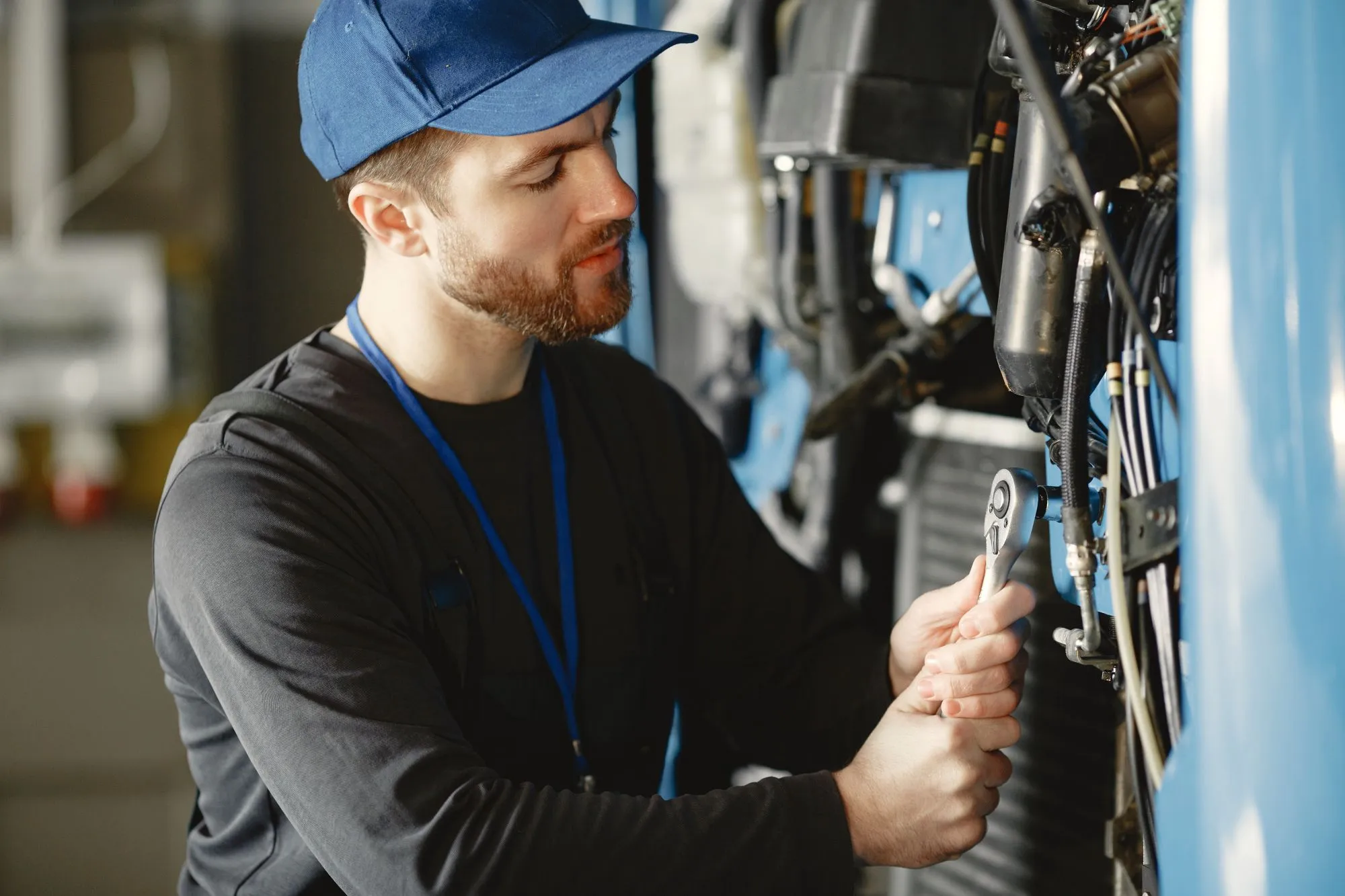
Minor Mechanical Failures That Don’t Require Lifting
Accessible battery, belt, hose, lighting, wiring, sensor, and minor air-system problems may be suitable for field repair. Suitability depends on the component’s location, system pressure, required calibration, available fluid containment, and whether the visible failure suggests related damage.
A small part does not always mean a minor repair. Replacing an accessible battery may be straightforward, while repeated battery failure could indicate an alternator, wiring, connection, or parasitic-draw problem requiring additional testing. A leaking hose may also be unsuitable for field repair if access requires significant disassembly or the fluid cannot be contained safely.
A completed mobile repair must meet the same service requirements as shop work before the vehicle returns to normal operation. Specified torque values, fluid levels, leak checks, fault clearing, and operational testing still apply. A temporary measure intended only to move the truck does not qualify as a permanent repair or approval for continued service.
Fleet Vehicles Down at Job Sites
A disabled truck at a construction site, fleet yard, warehouse, or customer property may be more economical to repair where it sits. On-site service avoids towing coordination and prevents the vehicle from being removed from a time-sensitive project.
The work area must provide enough room for the service vehicle, equipment, and technician outside active traffic and equipment routes. A firm, level surface, adequate clearance, site authorization, and a way to isolate the truck from surrounding operations may also be necessary. Without those conditions, the truck should be moved to an appropriate repair environment.
Vehicle configuration materially affects the decision. A loaded truck, attached trailer, hydrovac unit, or vehicle carrying specialized equipment may require load transfer, trailer separation, or additional towing equipment before transportation. These complications often favour mobile repair when the fault remains suitable for field work.
On-site service may also reduce fleet-wide disruption when several vehicles at the same location require scheduled maintenance or contained repairs. Travel and setup time are then distributed across multiple units instead of removing each one from the yard separately.
Time-Sensitive Repairs Where Towing Creates Delays
Mobile repair often reduces downtime when a tow truck is unavailable, the vehicle is difficult to access, or transportation would interrupt a scheduled job. This advantage is strongest when the probable fault is known and the required parts are confirmed before the technician arrives.
The expected mobile response should still be compared with tow availability, shop capacity, travel distance, and parts availability. Mobile dispatch is not the faster option if the technician faces a lengthy delay or needs another trip for equipment or parts.
Urgency does not make an unsuitable repair safe to perform in the field. A truck with a serious steering, braking, suspension, driveline, structural, or fluid-loss concern should remain out of service until a technician determines whether proper on-site repair is feasible or transportation is necessary.
When Shop Repair Is the Safer or More Efficient Option
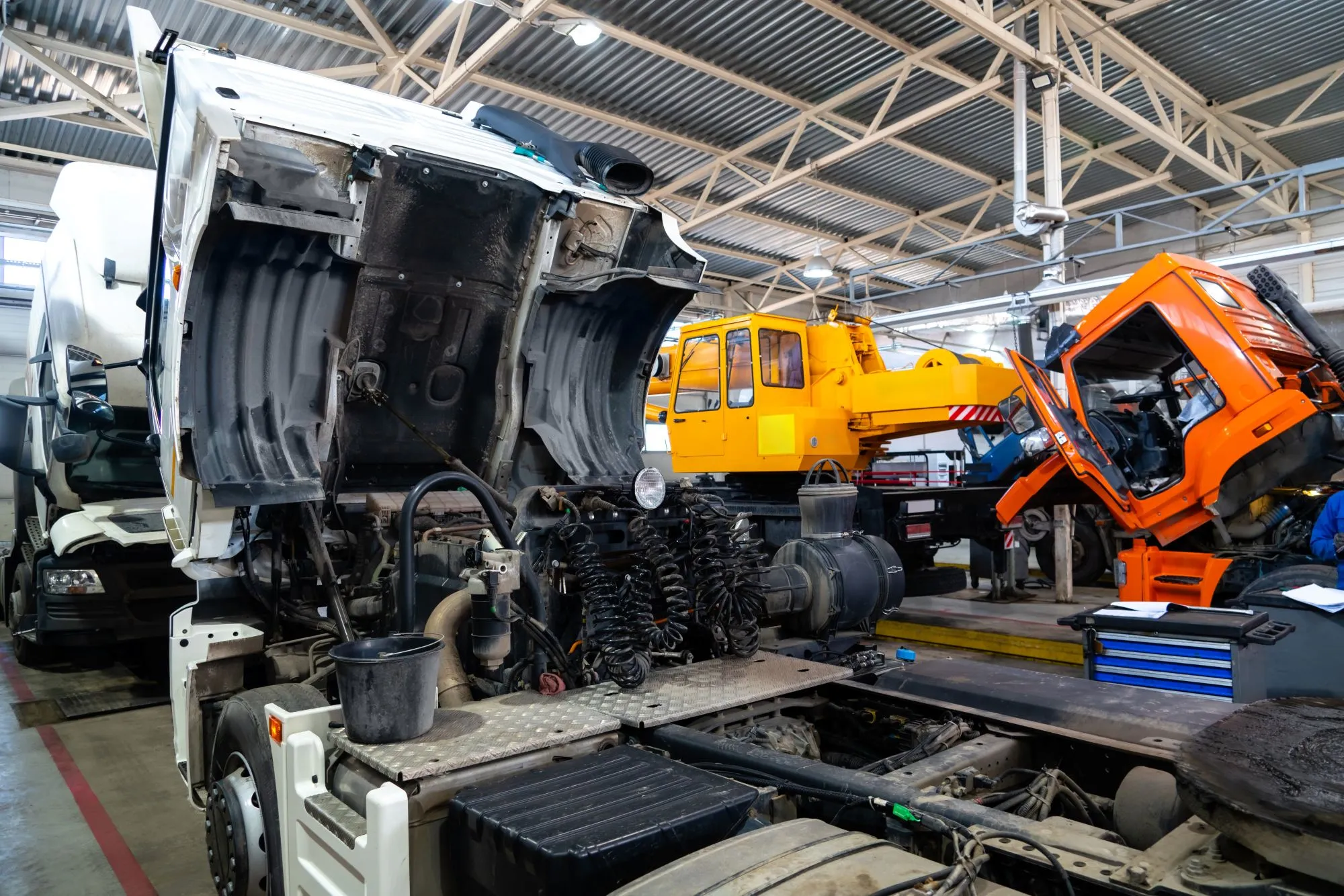
Shop repair is appropriate when the truck lacks safe stabilization, the work area is uncontrolled, or field equipment does not support the required procedures. It is also more efficient when the repair is likely to require extensive disassembly, several diagnostic stages, or access to multiple replacement components.
Repairs Requiring Specialized Equipment or Hoists
Major engine or transmission work, clutch replacement, internal component repair, precision wheel alignment, machining, and repairs involving heavy component removal generally require a properly equipped shop. Extensive axle, driveline, suspension, or brake work may also depend on rated lifting equipment, secure support points, component stands, and precise measuring tools.
A repair should not proceed in the field if it involves unsupported lifting, unstable ground, inadequate clearance, uncontrolled fluid discharge, or removal of a component that available equipment cannot handle safely. Manufacturer procedures, specified torque values, required clearances, calibration, leak testing, and operational verification must remain achievable regardless of where the work occurs.
Specialized mobile units sometimes support work beyond the capabilities of a basic service truck. Therefore, the boundary depends on the technician’s equipment, the site, and the required procedure rather than the component name alone.
Diagnostic-Heavy or Multi-System Failures
A truck with intermittent faults, several warning lights, network communication problems, or symptoms affecting multiple systems may require extended testing. Shop access supports circuit load testing, live-data comparisons, component isolation, service-information review, and fault reproduction under controlled conditions.
Mobile diagnosis should stop when scan results are inconclusive, the fault cannot be reproduced safely, additional service information is required, or further testing depends on unavailable equipment. Continuing field diagnosis under those conditions adds labour without bringing the repair closer to completion.
A mobile diagnostic visit still helps determine whether the truck is safe to drive, suitable for on-site repair, or in need of towing. However, diagnosis should not progress into repeated parts replacement when the underlying cause remains unconfirmed.
Compliance-Critical Repairs Before CVIP
Mobile repair may correct some known defects before a Commercial Vehicle Inspection Program inspection. Accessible lighting, wiring, hose, or minor mechanical problems may be suitable when proper repair and testing are possible at the vehicle’s location.
Corrective work is separate from compliance certification. A mobile repair addresses a defect but does not confirm that the vehicle will pass its CVIP inspection. Alberta requires commercial vehicle inspections to be completed by licensed technicians working through facilities authorized for the applicable vehicle type.
Steering, braking, suspension, structural, and other safety-critical concerns may require shop equipment for measurement, disassembly, or verification. Repairing the visible symptom without identifying its cause may leave the underlying compliance issue unresolved.
Whether the truck should be driven to the shop depends on the defect, not whether the vehicle physically moves. Transportation is necessary when the condition makes operation unsafe or when the truck has been placed out of service and is not legally permitted to return to the road until repaired.
Cost and Risk Tradeoffs to Consider
The break-even point occurs when the expected total cost of mobile repair exceeds the cost of transporting and repairing the truck at the shop. The mobile calculation should include the call-out charge, travel, field labour, parts, downtime, and expected cost of a return visit or eventual tow. The shop calculation should include towing, shop labour, driver time, load transfer, transportation coordination, queue time, and lost vehicle use.
Mobile repair is usually more economical when the fault has been narrowed down, the required part is available, and completion during one visit is likely. Shop repair often becomes more economical when diagnosis is uncertain, several components require testing, or the technician may need additional tools and parts after work begins.
The likelihood of follow-up work should be treated as a cost rather than a minor inconvenience. A mobile visit followed by parts retrieval, another dispatch, or towing may cost more than sending the truck directly to the shop. This is especially important when the vehicle must return immediately to high-mileage, heavy-load, or time-sensitive service.
Repair quality is not determined by whether the work occurs on-site or in a shop. The relevant question is whether the location, equipment, parts, and verification process support a complete repair. Field work becomes the higher-risk option only when those conditions are not available.
How Calgary Conditions Affect the Decision
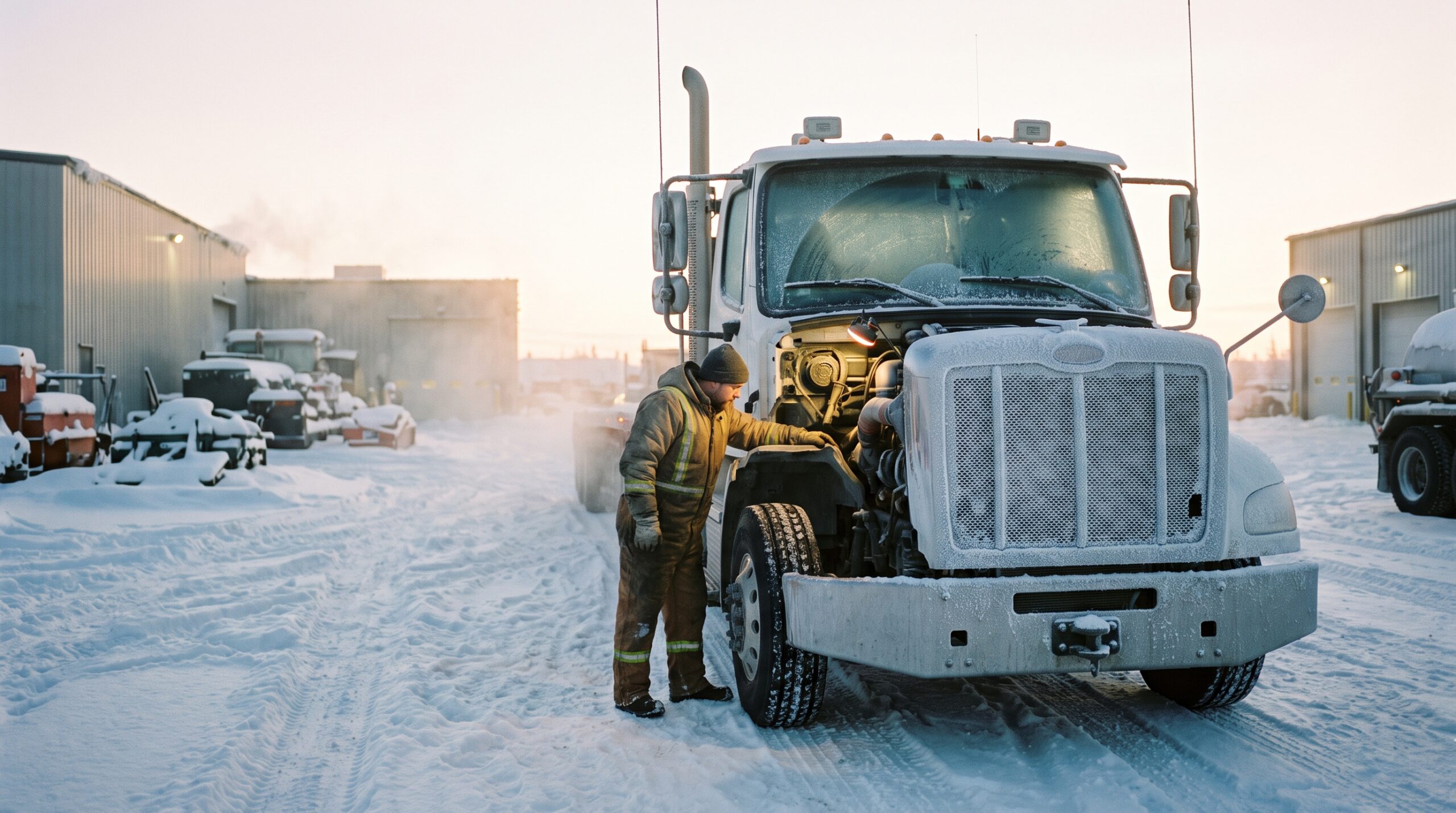
Calgary weather may change whether an otherwise manageable repair remains suitable for the field. Extreme cold affects batteries, electrical testing, air systems, fluids, seals, and brittle connections. Snow, ice, wind, and poor visibility make lifting, disassembly, fluid handling, and final inspection less safe or reliable.
Weather warrants shop repair when the technician lacks safe footing, adequate lighting, necessary component temperatures, or control over fluids and contamination. Moving the truck indoors under those conditions protects both the technician and the accuracy of the repair.
Severe weather may delay mobile technicians and towing providers at the same time. Fleet managers should compare current response estimates instead of assuming one option will always be faster. Traffic, road closures, service distance, and vehicle accessibility affect both choices.
The site itself may be more important than the forecast. A truck parked inside a fleet yard with lighting and a level surface presents different conditions from one stopped on an exposed shoulder or active construction site. Soft ground, locked gates, overhead restrictions, traffic exposure, and insufficient clearance may prevent a mobile unit from reaching or safely working around the vehicle.
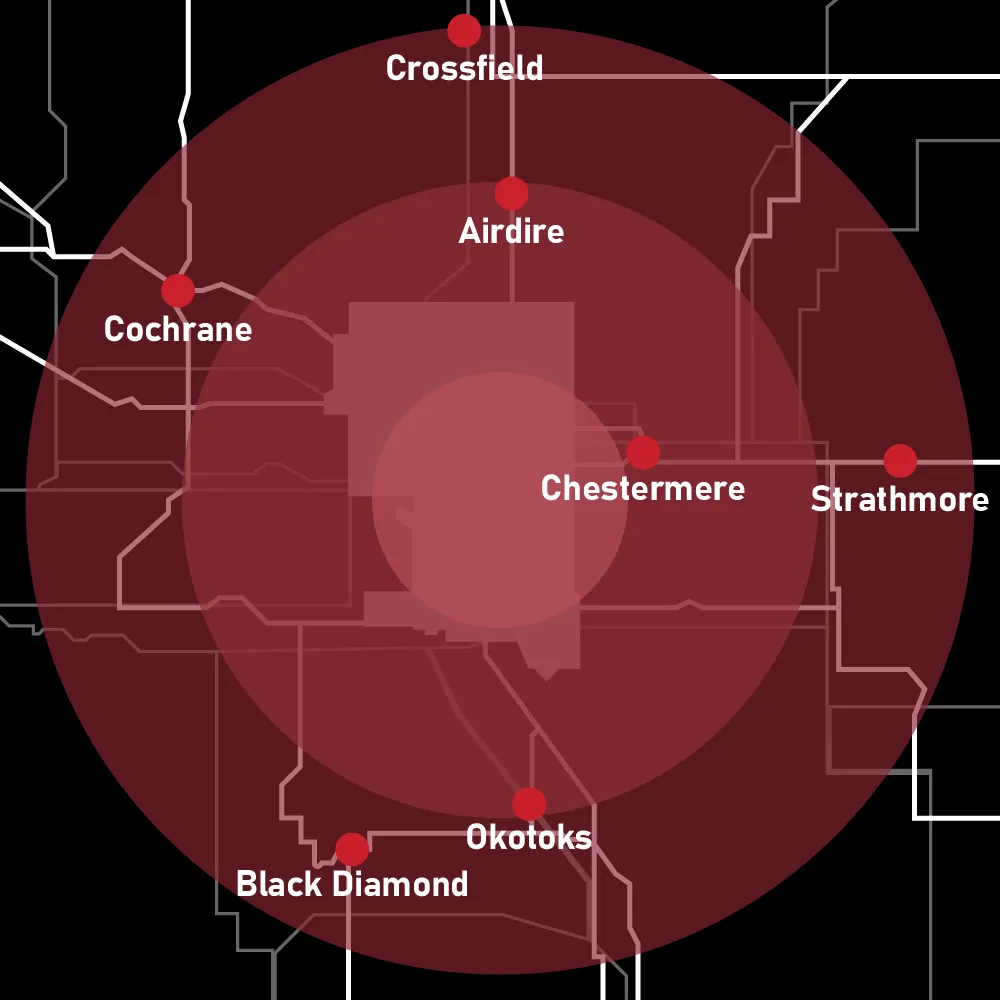
Rusted Nuts provides mobile truck repair in Calgary and surrounding communities within its stated service area. The truck’s exact location and site conditions should still be confirmed before relying on mobile service as the faster option.
Choosing the Right Repair Method for Your Fleet
An accurate recommendation begins with complete information about the incident. Provide the vehicle type, loaded or unloaded status, trailer or equipment configuration, exact location, site-access restrictions, warning indicators, fault codes, fluid loss, recent repair history, and symptoms present before the truck stopped.
Also confirm whether the vehicle moves, whether it has been placed out of service, and whether driving it risks additional damage. Photos of the truck’s position, visible damage, leaks, and surrounding work area may help establish whether the site supports safe mobile work.
Rusted Nuts Mechanical Services uses these details to assess the likely repair scope, equipment requirements, site suitability, and transportation risk. That assessment indicates whether mobile service is likely to resolve the problem efficiently or whether direct shop transportation will reduce total downtime and avoid duplicate costs